


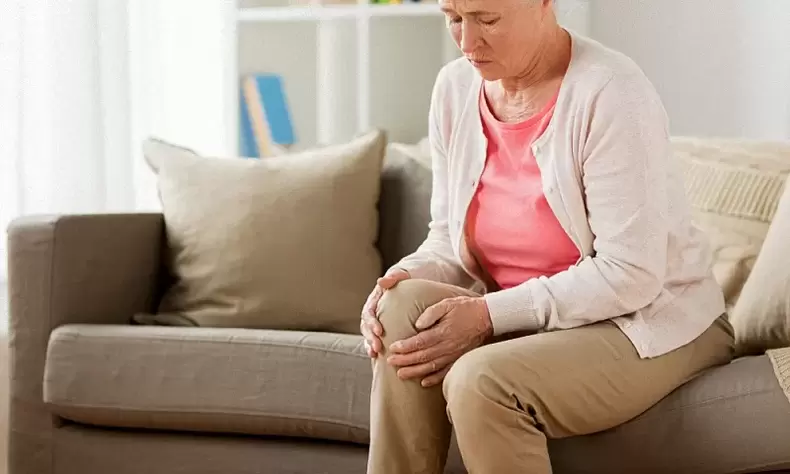
Osteoarthritis is the most common form of arthritis, also known as osteoarthritis.Arthrosis, unlike arthritis, is not an inflammatory disease, but a chronic degenerative form.It especially affects older people and occurs due to wear and tear of the cartilage in the joints.
The joint structures most affected are those subjected to the most stress and weight, including the knees, hips, shoulders, arms, legs and spine.The degenerative process of osteoarthritis leads to thinning of the articular cartilage and bone deformations that cause pain and specific symptoms of osteoarthritis, especially visible, for example, in the distal phalanges of the hands.
What are the symptoms of arthrosis?
Osteoarthritis has symptoms that are common to all types of arthritis, such as:
- Joint pain.
- Stiffness in joints.
- Decreased flexibility in the affected joint.
- Bone friction.
- Swelling around the affected joint.
- Bone spurs.
What is the difference between arthritis and arthrosis?
The main difference between arthritis and osteoarthritis is that arthritis is a term that covers all types of arthritis, including osteoarthritis.Another difference is that osteoarthritis can affect any joint in your body and is most commonly caused by wear and tear on the joints.In some cases, arthritis is used to refer to rheumatoid arthritis, while osteoarthritis is used to refer to osteoarthritis.
Types of arthrosis
Gonarthrosis
Gonarthrosis is arthrosis of the knee joint, the symptoms and treatment of which are closely related.Degenerative-dystrophic pathology develops as a result of systemic load on cartilage tissue.Most often, the disease is diagnosed in women and the elderly, but cases of the disease also occur in patients over 30 years old.
Symptoms of gonarthrosis and its treatment
The risk group includes workers engaged in heavy physical work, people who, due to their profession, constantly sit or stand all day and athletes.Osteoarthritis of the knee joint and its symptoms are manifested:
- constant painful sensations, aggravated by walking on stairs or by exertion;
- twitching and pain, in the absence of adequate treatment, the intensity of symptoms increases gradually, especially with hypothermia;
- swelling in the joint area, which can also signal the development of arthritis, but in this case it appears only during exacerbations and is accompanied by unpleasant discomfort.
The inflammatory process that occurs in the joint is arthrosis of the knee, the symptoms of which require timely contact with an orthopedist or surgeon.In an advanced stage, surgical intervention may be required;drug therapy is ineffective.Signs that indicate this are unsteadiness while walking, difficulty in steering the knee, discomfort in walking and deformity of the joints.
Important!It is impossible to completely cure arthrosis.But by starting therapy in the early stages of the development of the disease, it is possible to slow down the destruction of cartilage tissue for a long time.
A comprehensive method of treating gonarthrosis includes:
- braces to ease the load on the medial parts of the knee joint;
- NSAIDs that block inflammatory processes and reduce pain intensity;
- weight loss - slows down the development of gonarthrosis;
- Exercise therapy without axial loads in the problem area allows you to restore muscle tone, prevent hypotrophy and restore joint mobility;
- muscle relaxants in minimal doses - reduce the intensity of joint tissue spasms, which reduces the syndrome that causes the disease;
- physiotherapeutic treatment;
- intra-articular injections of hyaluronic acid;
- the use of chondroprotectors;
- drugs that stimulate blood supply to bone tissue;
- arthroscopy (for medical reasons);
- endoprosthetics - replacement of a joint in the absence of effectiveness from conservative therapy.
Treatment of arthrosis of the knee joint with folk remedies requires a special approach on the part of the patient and the surgeon.There are many recipes for compresses, as well as ointments based on bile and herbs.In complex therapy, sheep wool bandages are used.This technique aims to reduce the intensity of pain and eliminate symptoms.
Osteoarthritis of the hip joint
The appearance of the disease varies according to its types.But there is also one main symptom - pain in the buttocks, groin and groin area.They intensify in the morning and become less pronounced during the day.It is difficult for the patient to stand up and he tries to bend over.
Arthrosis of the hip joint and its symptoms according to the type of pathology
Purulent arthrosis
Occurs in an acute form against the background of high temperature and severe symptoms:
- the joint becomes red, swollen and hot to the touch;
- stiffness of movement due to acute pain;
- accumulation of pus, causing an abscess, and when it ruptures, a fistula.
For diagnostic purposes, a sample of synovial fluid is taken and checked in the laboratory for the presence of a pathogen and its response to antibiotics.
Specific type of pathology
The disease appears under the influence of the tuberculosis bacillus.The clinical manifestations of arthrosis are mild: the pain first appears during physical activity, then at rest.There are no obvious symptoms, but the fold of skin over the damaged area is thicker than over the others.The child shows lameness.
If the causative agent of the disease is gonorrhea, the onset of the inflammatory process will be sharp and rapid.
Hip arthrosis has symptoms such as damage:
- tendons;
- ligaments;
- bag
Reactive type of the disease
The disease develops rapidly and affects the joints, mucosa, nails, epidermis and lymph nodes.Heart rhythm may be disturbed.
Rheumatoid type of pathology
It affects two joints at the same time, they swell, stiffness of movement is observed, and nearby organs can become inflamed.
Ankylosing spondylitis
Disturbance in its symptoms resembles sciatica, the pain radiates to the hip and groin area.Blood plasma analysis diagnoses accelerated ESR.
Transient coxitis
Children complain of severe pain in the groin, discomfort during movement and lameness.The inflammatory process can spread to other organs.The signs of the disease are more pronounced in children than in adults.
Important!Osteoarthritis of the hip joint has different symptoms and the treatment depends on the form of the disease and its nature.Before starting therapy, it is necessary to undergo a comprehensive examination: MRI, x-ray of the affected area.
Complex therapy of arthrosis
One of the most common diseases in the elderly is hip arthrosis, the symptoms and treatment of which are of interest not only to surgeons and orthopedists, but also to the patients themselves.
The purpose of complex therapy:
- pain relief;
- restoring the functions of the damaged joint;
- eliminate the pathology that causes the development of arthrosis.
Osteoarthritis of the hip joint and its symptoms can be eliminated by treatment with folk remedies, but they will only reduce the intensity of the pain syndrome and will not completely block the inflammatory process.
Complex therapy for arthrosis includes:
- taking medications: NSAIDs, administration of glucocorticoids within the problem joint for acute pain syndrome;
- additional methods of influence: exercise therapy, massage, biological complexes, folk remedies;
- surgical intervention - prosthesis (used in advanced stages of the disease, in the absence of effect from conservative treatment).
It is better to perform the exercises lying down or sitting, this will reduce the load on the joints.Squats with arthrosis are contraindicated.Massage and water treatments have a positive effect.
Signs of inflammation of the shoulder joint and its treatment
The disease develops gradually, as do the symptoms.At first, the clinical manifestations of arthrosis are insignificant, then they become more pronounced.Depending on the severity of the inflammatory process, doctors distinguish 3 stages of the development of the disease.
Osteoarthritis of the shoulder joint has the following symptoms, which appear depending on the form of the disease:
The degree of the inflammatory process |
Features, signs |
|---|---|
Phase 1 |
Aching pain in shoulder region, worse at night.The movement is free, but when you move the arm back, there is an unpleasant discomfort.X-rays can be used to diagnose osteoarthritis.Symptoms of grade 1 arthrosis can be observed for 2-3 months or several years. |
Phase 2 |
Signs of arthrosis are more pronounced.Discomfort in the shoulder blades and shoulders intensify and become permanent;when you wave your hand, you hear an unpleasant crunching noise. Movements are limited due to spasm of muscle tissue, pain, especially when moving the arm back.The patient cannot clasp his hands behind his back.Muscles in the shoulder area atrophy. |
Phase 3 |
Shoulder arthrosis and its symptoms:
|
Watch out!Grade 3 arthrosis is not observed in all patients;the inflammatory process is generally inhibited in the earlier stages.The risk of developing pathology exists in people who continue to load the damaged joints (if they do not want to change their profession).
Osteoarthritis of the shoulder joint, the symptoms and treatment of which must be constantly monitored by a surgeon or orthopedist, gradually destroys cartilage tissue and can result in disability.At the first signs of the disease, it is necessary to undergo an examination and start therapy.
The disease of arthrosis and its symptoms are eliminated using classical treatment methods.Complex therapy includes:
- NSAIDs to relieve joint pain and swelling;
- topical anti-inflammatory creams;
- chondroprotectors for cartilage tissue restoration;
- gradual development of the damaged joint.
To consolidate the effectiveness of drug therapy, doctors prescribe exercise therapy and physiotherapy.As a result of complex therapy, arthrosis and the symptoms of the inflammatory process gradually disappear, the disease subsides.
Signs and treatment of arthrosis of the ankle
Foot arthrosis is associated with thinning, destruction of muscle tissue, as well as changes and deformations of the cartilage structure.Diagnosis of the disease in the initial stages is the key to effective therapy.
Ankle arthrosis has the following symptoms:
- constant pain in the leg area;
- unpleasant discomfort in the ankle during sudden movements;
- cramping, pain during exercise;
- tired legs;
- constant sprains, twists, dislocations.
If such symptoms are detected, it is necessary to contact a surgeon in order not to complicate the treatment of arthrosis.Timely diagnosis of the pathology will help prevent irreversible consequences.
Symptoms and treatment of arthrosis of the foot are interconnected and require an integrated approach.
Adequate therapy includes the following methods of influence:
- a bandage, a cane while walking, to relieve the ankle;
- avoiding excessive loads, weight control;
- refusal of alcoholic beverages, cigarettes;
- physiotherapy: magnet, laser, SMT, UHF treatment;
- taking medication:
- NSAIDs (injections, inside, outside);
- glucocorticoids together with anesthetics periarticularly, intraarticularly to block the inflammatory process;
- vascular drugs;
- muscle relaxants to eliminate muscle spasms;
- chondroprotectors intra-articularly or intramuscularly;
- medications with hyaluronic acid to restore the quality of the synovial substance;
- orthopedic shoes, insoles;
- Exercise therapy to strengthen ligaments and muscles (10 approaches):
- sitting or lying down, bend and point your fingers;
- turn your legs inside out;
- sitting or lying down, pull your ankle toward you, then away from you;
- moving in a circle with your feet clockwise, then counterclockwise;
- sitting on a hill, place your feet on the surface of the floor with the heels and toes together, alternately moving your legs back and forth;
- water aerobics, swimming.
Grade 3 arthrosis of the ankle joint, the symptoms and treatment of which require special attention, can lead to disability.To avoid this, replacement with an endoprosthesis or removal of the problematic cartilage, as well as the capsule, is performed with closure using a special rod or transosseous compression-straction device.
With constant physical activity and a sedentary lifestyle, many people develop spinal arthrosis, the symptoms of which are manifested by the following signs: pain when bending down, in a horizontal position their intensity decreases, discomfort is localized in one area of the back, stiffness in the morning, discomfort when working at a desk.
Inflammation of the small joints of the hands and fingers
Systemic stress on the hands and genetic predisposition are the first signal that a person may develop arthrosis.
Arthrosis of the hands has symptoms such as:
- pain in the problem area;
- when you bend and straighten your fingers, unpleasant discomfort appears;
- swelling, severe cramping;
- redness of the tissues surrounding the problematic joint;
- arthrosis of the hands and its symptoms are manifested by joint thickening, the formation of Bouchard and Heberden joints;
- fingers lose their sensitivity.
Important!The use of only traditional medicine for the elimination of arthrosis does not bring the desired result, as a result, the disease progresses further.Finger arthrosis is a problem that concerns not only the elderly, but also patients over 30 years old and requires complex therapy.
Stable and complete remission is achieved using the following technique:
- physiotherapy;
- therapeutic and preventive physical education;
- acupuncture, massage;
- the symptoms of arthrosis of the fingers help to neutralize the use of medicines;
- recipes of traditional medicine;
- surgical intervention.
Topical creams and ointments provide an excellent therapeutic and preventive effect.Their use reduces the intensity of pain, restores blood circulation and joint mobility.
Toe arthrosis and the symptoms of the disease can be eliminated only in the initial stages of its development.The destruction in the later stages of the pathology is irreversible and becomes chronic.In this case, conservative treatment is prescribed, the purpose of which is to prevent the further development of the pathological process.
One of the most insidious joint diseases is arthrosis of the hands;the symptoms and treatment of this pathology must be constantly monitored by a surgeon or orthopedist.Complex therapy is prescribed taking into account the general condition of the patient and the nature of the disease.For appointments, you will need to undergo an examination and a computed tomography.
Elbow joint arthrosis: signs and treatment
The inflammatory process causes thinning of the cartilage and helps reduce the mobility of the problem area.Elbow arthrosis, the symptoms of which are similar to arthritis, manifests itself in the form of severe pain when extending, bending, turning or moving the arm.Discomfort appears after exercise, sometimes occurring regardless of the presence of an irritating factor.
Other initial manifestations of arthrosis:
- when you wave your hand, you hear a click;
- loss of sensation in the hands, numbness;
- muscle weakness that occurs when squeezing or lifting large objects;
- tingling, burning in the fingers - occurs when the ulnar nerve is damaged;
- difficulty moving.
Arthrosis of the elbow joint is a disease that worries specialists and patients for many years and requires complex therapy.
Depending on the severity of the pathology, 3 degrees of arthrosis are distinguished:
Stage of the inflammatory process |
Characteristics, symptoms |
|---|---|
1st degree |
It is characterized by periodic pain that appears during exercise and stiffness of the muscle tissue.There are no external symptoms of arthrosis at this stage.Patients often confuse such signs with a simple injury. If the symptoms of arthrosis of the elbow joint are identified in the first stage of the development of the disease, they can be successfully and quickly eliminated. |
2nd degree |
The muscles located near the damaged joint gradually atrophy, the cartilage tissue is destroyed and depleted.With constant stress, severe pain is observed. |
3rd degree |
The pain is constant and can appear after physical activity or even at night.It is almost impossible to cure the disease, and even surgical intervention does not always contribute to recovery. If a patient has arthrosis of the joints or its symptoms, and the treatment of the disease does not bring results, an urgent examination is required to identify the cause of the destruction of cartilage tissue. |
Complex therapy for elbow arthrosis includes:
- acupuncture– impact on biological points using needles with the introduction of homeopathy;
- moxa therapy– Warming with wormwood cigarettes, the treatment is effective for the slow chronic inflammatory process;
- osteopathy- eliminates the symptoms of arthritis and arthrosis through osteopathic treatment, thanks to which all the forces of the human body are activated;
- manual therapy, physiotherapy;
- Hirudotherapy- treatment method using leeches.
More often, the symptoms of joint arthrosis can be recognized in the initial stages of the disease;prevention and non-drug adjunctive treatment can yield excellent results.
In difficult situations, doctors prescribe:
- non-steroidal anti-inflammatory drugs;
- reparante – replacement of synovial substance;
- multivitamin complex;
- pain reliever.
A combination of techniques helps to eliminate the symptoms of arthrosis, and home treatment does not require much effort.Alternative therapy will reduce the number of medications prescribed for the treatment of the inflammatory process occurring in cartilage tissue.
Traditional medicine and arthrosis
Alternative therapy is popular among many patients, but it must be supplemented by taking medications and other methods.If a person is interested in what arthrosis is, the symptoms and treatment of the pathology, he should urgently undergo an examination.Based on the diagnostic results, the surgeon will prescribe the appropriate therapy, which can be supplemented with herbal prescriptions.
Medicines and folk remedies will help eliminate joint arthrosis:
- Ointment with propolis:Main ingredient - 50 gr.freeze, cut, put in a glass container, add vegetable oil (50 ml).We put the prepared mass in a water bath and boil it until a homogeneous mass is created.Treat damaged joints for 3 months.
- Warming compress based on honey and radish.Squeeze the juice from a large root vegetable, combine with 150 ml of honey, salt - a tablespoon.spoon and vodka 100 ml.Rub the prepared liquid on the problem areas, then wrap it with a woolen scarf.
- Bean soup.Grind the ingredient (20 grams), add the juice (1000 ml), put it on the fire, boil for 30 minutes under the lid, cool, strain.Drink 150 ml 4 times a day before meals.
- Infusion of birch buds.It helps to eliminate the symptoms of arthrosis of the feet and complements the treatment with medications.The main ingredient is 5 grams, pour boiling water (200 ml), boil on low heat for 15 minutes, leave for 1.5 hours, filter, consume 1/2 cup once a day an hour before meals.
- Corn silk stew.The drug is indicated for arthritis, arthrosis and rheumatism.Ingredients – 2 teaspoons, pour boiling water (glass), leave for 1/4 hour, filter.The prepared composition is taken 4 times a day, 15 ml, half an hour before meals.The duration of treatment is 21 days.
Preventing the destruction of cartilage tissue involves avoiding heavy physical exertion and injury.In this situation, weight control plays a big role.Excess weight - systematic pressure on the cartilage.
Various exercises are useful to prevent arthrosis: skiing, walking.Adequate treatment of endocrine pathologies and proper nutrition reduce the likelihood of joint destruction.
Timely diagnosis, the help of a doctor who will prescribe the appropriate drug therapy, chondroprotectors that restore cartilage tissue - a guarantee that the joints will maintain mobility, youth, flexibility and softness.And the treatment of arthrosis with prescriptions of traditional medicine is affordable and an excellent assistant in the complex therapy of the inflammatory process.